Monday, August 31, 2020

Room For Thought

I just came across this old draft that I never finished or posted. I do not know where I originally intended to go with it, but I think it is ready and as applicable today as whenever I wrote it.

Self-seeding annuals were taking over the garden, so were thinned out. Overgrown and out of shape shrubs were pruned back hard. Plants that had outgrown their bounds or were sprawling and gave the garden a weedy, untended look were divided and tidied. Definitely a bold move, daunting to some. As always, some plants did not survive the winter and less interesting or unhappy plants were removed. Young plants are still filling in. This all leaves gaps in the garden. For a person who strives for the cottage garden look, or even a full established garden, this can leave feelings of inadequacy. People looking at the garden can feel as awkward as long gaps of silence in a conversation. The thing is, I am not usually bothered by stretches of silence. They provide room for thought which lead to deeper conversation than when filled with trivial chatter. I got to thinking, the same is true of those spaces in the garden. I could fill them with insignificant plants or let others continue past the point of interest, but then there would not be room for more desirable plants that take more time and effort to find or for established plants to shine. Pauses in the garden and in conversation allow space for more depth and interest, something badly needed in this fast paced, often shallow world.

Friday, April 12, 2019

Goal For 2019

Wow! It has been a long time since I've posted. I even had to stop and figure how to make a new post.

It is my goal for 2019 to update my pages. I've gotten different plants, lost others, taken new pictures, found great old ones, made new notes, pursued other passions (here's one), and everything on the computer has fallen behind. I figure if I take it one plant at a time as it comes into bloom instead of trying to tackle it as one big job, I'm more likely to get the job done. I hope you'll stick with me.

I also hope to refine my own garden this year. It has gotten harder for me to find new plants that aren't similar to ones I already have, or have had but didn't like (or they didn't like me). Eventually I suppose I'll expand my online plant shopping horizons, but for now I mostly prefer to stick to the experience of walking through plant displays and seeing who calls my name. A computer screen can't compete with the smell and feel of real plants, and the ability to look at in person and determine for myself which one is best. Though I do have plant shopping plans, my focus has changed some from filling gaps with new plants to moving plants, maybe removing some, and allowing others to fill in a larger area.

I have spent enough time on the computer for now. Life cannot be lived virtually. Go out. Try new things, learn new ideas, expand your horizons. Pursue you passions. If something must be done, find joy in it. If something is worth doing, it's worth doing intensely. Love with all your heart. Share your time with those who share your values; the circle will be small, but the connection deep. Most important, share your gifts, whatever they may be, with others.

Wednesday, April 29, 2015

The Best Mistakes

I am slowly making my way back into the garden after a long winter ... not weather-wise, but in every other way.  Late last summer my Dad was diagnosed with bladder cancer, something we are still dealing with; in January my Mom had a stroke and broke her hip and we lost her in March; in March Jim's sister was diagnosed with dementia and we are currently trying to get all of her affairs in order.  Meanwhile my ladies await help in their gardens and I fit them in as I can.

I always try to learn from mistakes, and as I tell my son, the best mistakes to learn from are someone else's.  I was on a job a couple of days ago that reminded me of a few biggies.

As I try to type with a painful finger that has the remains of a rose thorn in it that I cannot dig out, I will begin with a lesson I learned years ago and a vow I made when I started growing roses. Never, no matter how big a hurry or how convenient and innocent it seems at the time, throw a rose cutting (or anything else with thorns) in the garden.  NEVER!  Even if you wear gloves 99.9% of the time in the garden, the time will come when you see something you want to catch really fast, and as you grab that leaf, weed or piece of trash that needs your attention, you will inadvertently grab the now hidden cutting, driving in and breaking off a time hardened and brittle thorn into your finger.  It is not worth the pain.  Take the time to properly dispose of every rose cutting.  If you see one that accidentally made its way into the garden, pick it up immediately.

Instead of trying to grow healthy plants, grow healthy soil.  Soil is where plants get their real nutrients, so when the soil is healthy, plants will be, too.  It is tempting to skip that step, but if your soil is unhealthy, with few exceptions, your plants will not reach their full potential.  Every aspect of gardening is easier and more enjoyable in beautiful soil.  Soil is the foundation of your garden; make sure it is strong.

If someone offers you an invasive plant, run.  Often these are the plants marketed as "will grow anywhere" or other such descriptions making them irresistible to the struggling gardener or a difficult area.  If you have already planted invasive plants, get them out now; every season you leave them makes them harder to get rid of.  This is especially important if you live near the edge of a natural habitat.  You may think you will be able to keep them under control, but eventually they will escape.  Once in the wild, they take over, choking out native plants or waterways and the wildlife that depends upon them.  Even in the suburban garden, the time will come that you want to grow something else, or maybe you already are, and you will not want some invasive plant popping up in and around it.  There are a plenty of plants that grow well and even spread in a variety of conditions, but are not invasive.  They are a much better choice.

Tuesday, September 2, 2014

Slug and Snail Killer

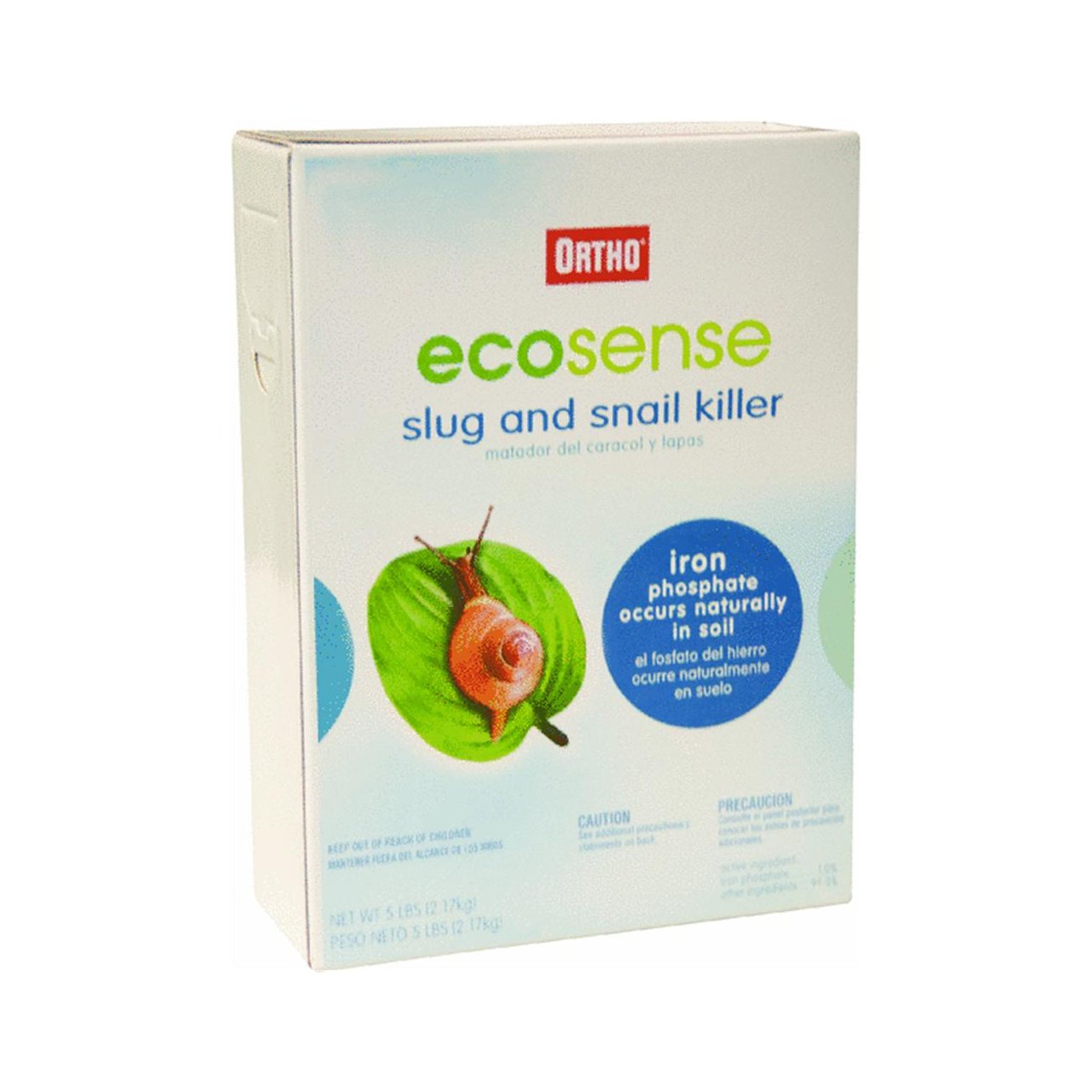
I do not have much of a problem with snails or slugs anymore.  They are the bane of Hosta gardeners, and indeed, I have fought a few battles with them in the past.  Now whenever I find I have some, which is rare, I bring out my big guns.

What is my secret weapon?  Slug and snail killer with the active ingredient of iron phosphate.  The last I bought was made by Ortho and I found it in the lawn and garden section of a local store, but there are other brands such as Escar-Go! and Sluggo to name a couple.

How does it work?  The iron phosphate shuts down the snail or slug's digestive system and it starves to death.  You do not see them laying around dead, but you gradually see less damage, then eventually no more.

How do you use it?  Sprinkle it around affected plants and the snails are drawn to.  I recommend hiding it under the plants so that it does not become expensive bird feed.

What are its advantages?  It is organic and gradually reverts back to the soil.  It is fast and easy to use.  It is safe to use around pets and kids.  It lasts through rain and watering without needed to be reapplied.  It works better than anything else I have tried.  In the early days I went through quite a bit, but now that they are under control, one box has lasted several years and will likely last several more.

Sunday, August 24, 2014

Organic Fertilizer

From time to time I have plants that need a little extra oomph and do not have enough compost or manure to go around.  I usually let it go because I know the plant will hold its own until some is available, but occasionally I do buy an organic fertilizer.  Here are some fertilizer tips and a couple I have recently tried and liked.  Both products are available from Amazon.

Many people think 10-10-10 is a well balanced fertilizer, but a NPK (nitrogen, phosphorus, potassium) ratio of 3-1-2 is preferable.  High numbers sound good, more bang for your buck, but they also indicate non-organic, and the faster growth they provide is also more prone to pests and problems.


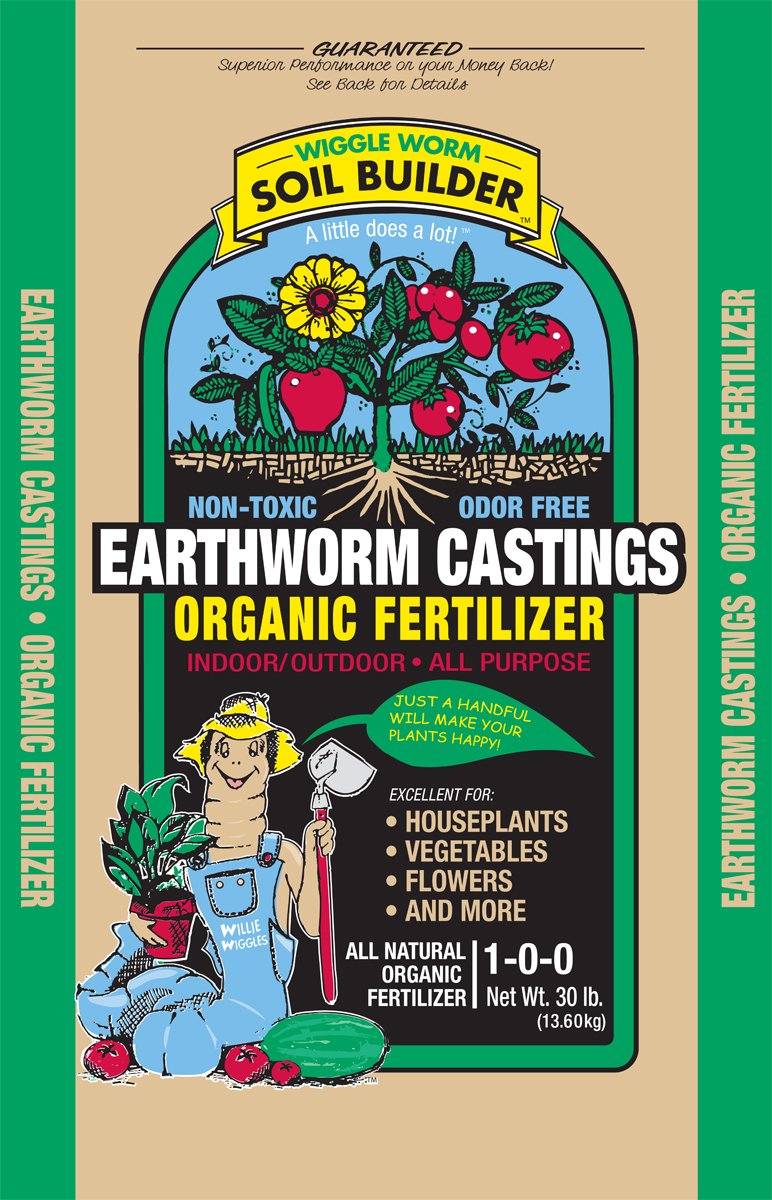
Wiggle Worm Soil Builder Earthworm Castings 1-0-0

Ease of use is definitely an advantage to the worm castings. According to the instructions, the castings are to be worked into the soil, but I did not have time or desire, so simply put a few tablespoons at the base of plants and waited for rain and Nature to do the rest.  I have also been using a handful around the roots in planting holes.

I was asked about the price of worm castings, were they not terribly expensive.  If you compare them to the cost of little packages of fertilizer, no, not really, and the benefits are far greater.


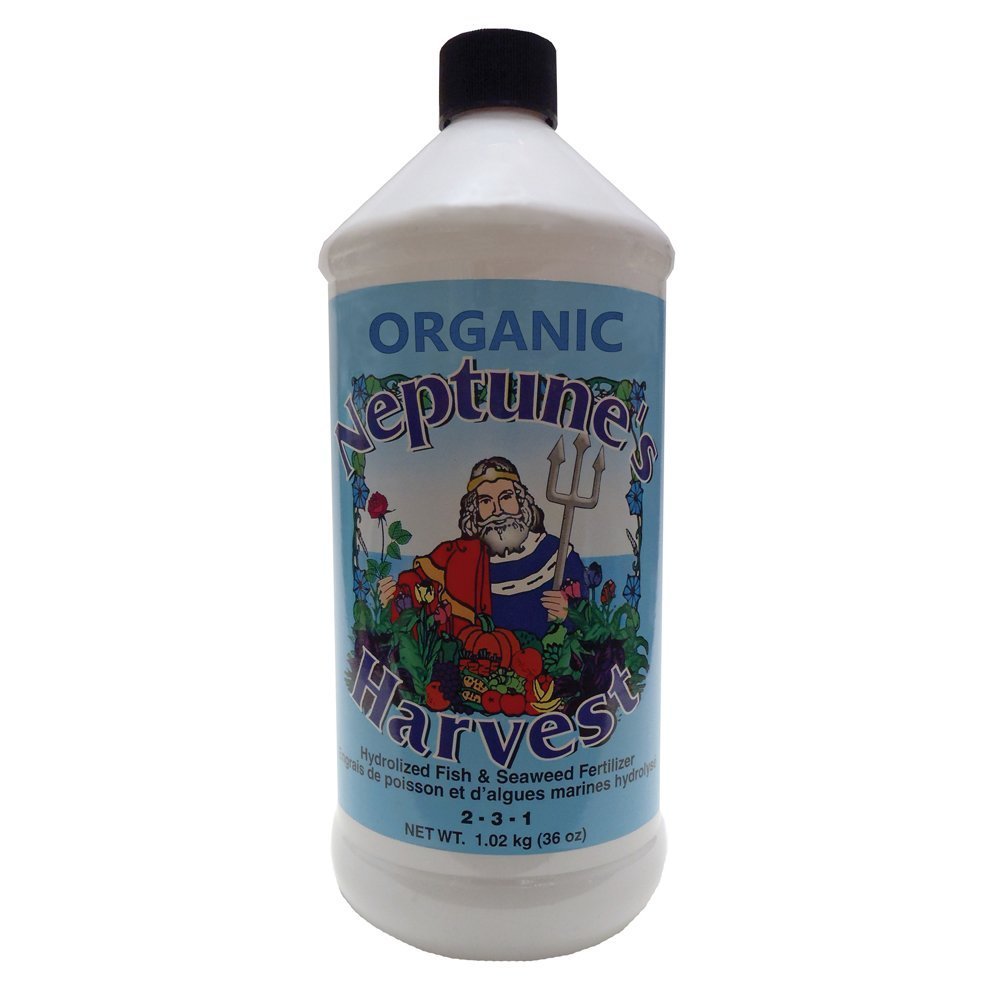
Neptune's Harvest Hydrolized Fish
& Seaweed Fertilizer 2-3-1

Some people in reviews complained of the smell.  It is made from fish and seaweed; if you have ever smelled either, it should be no surprise to you that it is not delightfully fragrant. However, the smell dissipates fairly quickly, so if applied in the evening as recommended as opposed to before a dinner party, it should be no problem.  I have also been using it to water new plants in.


Bottom line on my opinion of both products ... I can tell a difference using them both individually and together.  I even decided to give most of my plants a little to help strengthen them for winter. Will I buy them again?  I have already ordered larger sizes of both and intend to keep them on hand.

Monday, June 9, 2014

Plant Sale

Technically to sell plants, you have to be certified by the USDA.  Unless you’re going to sell online or start a nursery, etc., you should not have any issues.   That said, inspect your plants for pests, disease, fungus, etc.  If in doubt, throw it out.  Not only do they risk your reputation, you spread potentially large problems.

I have “plant sale” signs I put out, sometimes in conjunction with a yard sale.  The earlier in spring, the better, so if you have a greenhouse, even a small one, make use of it.  A lot of people spend their plant budget early.  Summer is not bad, but most people do not buy in late summer or fall.  If you are willing, let people know you always have plants out; I have even had people leave money in the door for plants when I was not home.  I have a reputation and people like my plants - the variety, the price, how they look and grow.  They also like my knowledge; take the time to know about what you have and share it, the good and the bad.  It is worth not selling a plant to gain trust.  Some people will just come for your knowledge, but they also bring friends who buy plants.

You can use butter tubs, yogurt containers, plastic cups, etc. for pots as long as you poke holes (hot nail works well) for drainage.  Put up a sign asking for pots.  I had one with the recycle logo saying something like, “Help keep plant prices down.  Donate old pots.  Reduce, reuse, recycle.” You would be surprised at how many people hoard nursery pots hoping to find someone to use them!  I would get big garbage bags full, so many I ended up donating to the botanical garden I worked at.  I have not had the sign in years, but still occasionally come home to a stack of pots someone dropped off.  You also frequently see them in the trash.  Blind slats make great plant labels and are also frequently found in the trash.

It is worth buying quality soil, usually something that says “professional” on it.  You can get cheap stuff, but the plants will struggle in it.  If it feels like a brick in the bag, it will be like a brick in the pot. Happy plants = better sales.

What plants?  First off, anything that says “PP” or “PPAF” is a patented plant, so propagation is prohibited and selling is bootlegging.  What sells in stores I frequently can not give away.  Day lilies and mums are good examples.  While some people like to try different plants, things that are not somewhat heard of sometimes do not sell well.  Sedums are pretty well known, easy to propagate, and fill in fast = good seller.  Hostas are well known and popular, also a good seller. Until I learned what sold or not, I put a variety of plants on the table as I divided or propagated them.  Even people who did not buy anything stopped by to see what was new.

I have the easiest propagation methods I have found for various plants at The Obsessed Gardener.  Plants usually transplant better if you cut them back and a pot full of new growth is more appealing.

Having a nice display of plants in your yard makes people say, “I want that!”  If you do not have any potted up but do have some to spare and know it will transplant well, pot up a start and sell it on the spot.  If you are not sure how well it will transplant, get their number and tell them you will contact them when it is ready.  Again, your reputation is everything and you do not want to sell plants that may not survive.  Photos of plants not in bloom, either from a catalog or that you have taken, are also helpful.

Keep it cheap.  Everyone likes a deal and you are competing with box stores.  It is easier to sell nice looking plants, and the longer they sit, the worse they look.  It is better to sell a lot cheap early on than have a lot to tend through the season, overwinter and risk losing.  $2-$3 based upon size is where I am at for most plants.  Much more and you are competing with box stores.  Most people see the size and price of the pot, not the value of the plant.  Once in awhile you get a serious gardener who knows it is a deal to get a particular plant for that price.  You will not necessarily make a lot, but it is nice to get paid for doing something you love and money to buy more plants.

Take advantage of the time during your plant sale to relax or work in your own garden.  I always greet people and tell them if they have any questions, feel free to ask, but do not smother them.  I hate sales people hovering around or talking as I browse, but do like knowing they are nearby if I need something, so extend that courtesy.

Sunday, May 25, 2014

Running a Temporary Water Line

We do not have a large yard but we have a lot of gardens with paths running between them.  I do not water a lot, but when I do, threading the hose around then winding it back up is a lot of work. Jim, always looking for ways to make things easier came up with a plan.


He put a Y connector on the back water facet.  On one side a water hose is connected for close by watering, a washing machine supply line is connected to the other side.


The washing machine supply line runs to a short PVC pipe fitted with a connector and elbow.  At the other end of the PVC pipe is another elbow connected to PVC pipe running underground the desired length.  Since it will be disconnected in the winter, freezing is not an issue, so it is only buried a few inches deep to be out of sight.


A box buried in the ground and lined with pea gravel provides a place for the other end of the PVC pipe, fitted with a water facet, to come out.


A water hose and nozzle are connected and kept nearby.  A piece of scrap wood provides a cover to prevent accidents.  Water is turned on and off at the main faucet.  It is definitely easier to move two separate fifty foot hoses than one hundred foot one!

Wednesday, May 7, 2014

Stop the Insanity

The weather has finally warmed, and like everyone else, I am taking advantage of it.  It can be a bit harder for me to work outside without distractions as I am the neighborhood go to person for plant questions.  My neighbor has a row of shrubs forming a hedge and decided to clean them out. It was a bigger task than she had anticipated, so she asked me if it would be okay to cut them back to about three feet. Being full of old, unproductive and dying wood, I recommended taking them down to about six inches.  I got a look from her and her husband as though I had said to take them out.  I reassured her that that is what I do and she sees how mine turn out; they put out new growth from the ground rather than being top heavy and naked at the bottom.  She proceeded to cut them back to about three feet with horrible, jagged results.  My son asked why she did not cut them back farther and she said she was afraid of hurting them.  I have seen this happen many times with many people.

Rewind a few years.  The same neighbor, knowing my stance on circumcision, decided to brag to me of her son's.  She told of how she could hear him screaming all the way down the hall and thought, "that's my boy!"  I have also heard variations of this (usually horrified by the screams, but still undeterred from circumcision) many times from many people.

What is wrong that people put more thought and caution into cutting old shrubs than perfect newborn boys? Plants need to be pruned, children do not.

For more information on circumcision, see Don't Mess With Mother Nature.

Sunday, January 5, 2014

Why I Do This

Why do I do this?  It takes a lot of time to take and post pictures and update blogs and websites.   Gardeners are in general a different breed of people and enjoy sharing.   Sure, it would be nice to have recognition and make money, but I do not distract with watermarks and paid ad options or limit with copyrights.  Why?  For one, gardening sites that do are a turn off to me, especially ones that start off free, rely on user input, then start charging a subscription fee.   Besides, if someone wants to steal my work, they are going to regardless.  A bigger reason?  You do not have to look far or pay a fee to find negativity and ugliness in one form or another that depresses, angers or encourages disrespect.  I want to make a difference.

Look at a picture of a beautiful flower or garden and feel the happiness come over you.  Walk through an overflowing garden and feel the tranquility it brings. Smell a rose and become intoxicated by its fragrance.  Bite into a garden fresh piece of produce and feel the delight of the flavor.  Dig your hands into beautiful soil and feel the connection with Earth and All That Is.  Watch a seed sprout and you have witnessed a miracle.  The garden is a wondrous place and I want to help bring its joys to the world by inspiring and educating.


"I've waited in the sun and listened to every one of the questions that you posed
and I have found the answers in the petals of a rose."
(from "Show Me The Way," sung by Liam Clancy)

Friday, January 3, 2014

The Cottage Garden = Functional Gardening

As the new year begins, gardening catalogs are sent out to inspire and take advantage of gardeners' dreams of the perfect garden.  Now is a good time to consider stretching your gardening boundaries.

I have always been drawn to the cottage garden.  Informal, inviting, lush, bountiful, overflowing, beautiful ... functional.  Functional?  Yes!  And as I plan next year's garden, that is becoming more important to me.  I have a small yard.  Too small.  I want more roses.  I want more vegetables.  Why should I have to choose one over the other?  Why can they not live together in peace and harmony?  It is not as though the gardening police are going to come arrest me if I decide to allow Tam Jalapeno  Pepper to live next to Graham Thomas Rose.

That is what a cottage garden is all about!  Though in recent years cottage gardens have become something more akin to organized chaos, they were originally making the most of limited space. Peasants only had a small amount of land, so in the space of their vegetable and herb gardens, they would grow ornamentals that had been passed along or propagated from the gardens of their masters.

What do you have when you plant herbs next to ornamentals next to vegetables?  Companion planting!  The biodiversity repels pests and attracts beneficial insects.  It keeps fungus and disease from jumping from plant to plant.  It aids organic gardening.  It creates interest.

For now I will keep my designated vegetable gardens for larger growing vegetables, but so those plants have more room, there is no reason to not tuck plants such as herbs, peppers, eggplants and okra (a relative of Hollyhocks and Rose of Sharon) in amongst the flowers.


Tuesday, December 31, 2013

What I Have Been Blessed To Do

I am not a religious person, but very spiritual, and I have been blessed in many ways.  I have grown a lot in the last ten years.  I will not say I was led by God because that insinuates that I am special in a way that other people are not, that I received help while others still struggle.  I will say that I reached such a low point in my life that I questioned everything and listened to hear the soft voice that is patiently waiting in all of our hearts to lead us to where we are meant to be.

I left a bad marriage, began volunteering at a botanical garden where my skills were recognized and I was offered a job, I was referred to help others in their gardens and I eventually found love. Taking care of my Mom and Grandma eventually became a bigger job and I quit the botanical garden.  Almost a year ago to the day, taking care of Grandma became a 24/7 job.

In the last year or so I began questioning where I should be in terms of gardening.  Did I still want to work in others' gardens or devote all of my time to Jim and our garden?  Our time together on Earth is limited and we enjoy each other's company so well that it is lonely being apart even for a few hours.  Then came the gardening season of 2013 that I could not leave Grandma's side; I devoted myself to her completely at the expense of myself.  From time to time some of the ladies I work for would contact me, not so much to see how things were, but to see if I was available yet. At least that is how it felt from my perspective. Not my friends, just seeing if Grandma was dead yet because they needed my help.  I could almost hear the disappointment in one lady's voice. On May 31st Grandma passed.  I did a few little jobs, but after the five months of abuse I put my body through, I needed to take care of myself emotionally and physically.  Still feeling sorry for myself, I decided I was going to quit the gardening work.

I have read in a number of places that whenever you are recovering from something, building your body back up, you should expect to spend about twice the amount of time you spent abusing it. Five very long months of no more than three hours of sleep at a time, jumping up and running on an adrenaline rush all through the night, eating fast food or whatever other garbage I could grab in a hurry to keep myself going, and of course, the emotional turmoil of losing a loved one.  Six months later, halfway through my estimated recovery period, brought the Holidays and a mixture of emotions that were hard to deal with.  I was so far off track.

I do not turn the television on a lot and I am not an Oprah fan, but last week Mom found something called Super Soul Sunday.  I listened as I worked around the house and was occasionally drawn in by something a guest said.  One guest, Rob Bell, did more than draw me in, he inspired me.  He spoke of finding your true calling and of a man, a house cleaner, who felt he was privileged to be allowed into peoples' homes to bring them cleanliness and organization.  A bell (no pun intended) went off and that different perspective played in my head as I anticipated the 2014 gardening season.  How could I have forgotten that lesson?  I planned on tuning into the next Super Soul Sunday in hopes of more inspiration, and I was not let down.  There were several good interviews, but Marianne Williamson was just what I needed.  She said so many noteworthy things, but the reminder I really needed was that the more we give, the more we receive.  It is in serving others that miracles occur in our own lives.

I am an introvert.  I am more than content with my close little network of loved ones.  From my perspective, if people expected more of me socially, I would feel overwhelmed.  I was feeling sorry for myself and looking at the whole situation from a negative standpoint rather than the positive.  I have a gift.  I know plants, not just academically, but have the ability to make them thrive and love doing it.  I have worked hard and earned an excellent reputation.  I am honored that there are people who entrust me to work in their gardens.  To them it is a sacred spot that they spent many years, maybe even a lifetime, building and growing. There are few people they would allow to step foot in their gardens, yet they are eager, even impatient to pay me work with their most valued plants.  I enter 2014 feeling inspired to do what I have been blessed to do.

Tuesday, December 10, 2013

The Great Point Experiment

I love garden experiments; when successful, they are amongst the most rewarding endeavors.  I have never bought Poinsettias ... too seasonal, too much work, not long enough lasting.  I had always tried to keep them going without success.  For several years I had one small, struggling stick of a Point that I had saved from the botanical garden I worked at.  Last year Jim bought one for the holidays that still looked fairly decent come spring.  I decided then to give them one last shot, something different than I had ever done.  Normally I would have repotted and fertilized them with minimal results.  This time I put them straight in the ground in an area they would have a decent chance in.  If they were still struggling as the weather cooled, into the compost they would go.  Though hopeful, I was nowhere near expectant of the results.

I cut them back hard before planting them in the ground and did nothing more.  By September when I potted them up, what had not been much more than a couple of twigs were the lushest two-feet-tall Points I had ever seen.  As the weather cooled, they went into the garage, the door being opened and shut morning and night for light.  Before the first freeze, they came in and were put into an unused room.  To make shuffling around easier and to protect the floor, they were put onto a wheeled platform.  To begin with we put them in a closet at night, but then I questioned the need for absolute darkness, especially when they did not always have a lot of light during the day.  On sunny days when we could have the front door (southern exposure) open, they were wheeled into the living room.  Special attention had to be paid to watering.  They needed a lot and do not want to dry out, but they cannot be kept soggy either.  Some of the inner leaves shed, but not enough to effect their beauty.

Another great idea is to cut the Point back to one stem and grow it into a tree.

Wednesday, November 6, 2013

Why Say NO! To GMO?

I used to buy bags of various animal feed as a special winter treat for my pet rabbits instead of buying little bags of fancy rabbit food.  I would supplement fifty pound bags of rabbit feed with oats, wheat, corn, sunflower seeds or some other bird seed.  Several years ago I bought a fifty pound bag of corn (horse feed) at the farm supply store, but the rabbits would not eat it.  Different rabbits have different taste preferences, so I did not think much of it.  I quit giving it to them, but kept the bag in the garage.

That winter we had a massive mouse infestation in the garage.  I smelled it, it was horrible.  I thought a cat had gotten into the garage and marked its territory because if there were mice, they would have been in the corn.  Come spring I discovered mice, so bad that as I threw things off the shelves or into the trash, they scattered.  Still the corn was untouched.  No droppings.  No partially eaten kernels.  No holes chewed in the bag.  Not a single sign of mice.  Odd, but I did not think much about it and in the garage it stayed.

Eventually we decided it was time for the corn to go.  It got dumped behind the garage for chipmunks and squirrels to carry away, and there it stayed.  Not only did they not eat it, it did not sprout!  After a few weeks it was scooped up and thrown away.

What was wrong with the corn?  I eventually found the answer.  GMO (genetically modified organism).  To prevent seed saving and create dependence upon the seed company, some seed will not sprout (the patent is strictly enforced on any that does).  It is not seed, it is not feed.  It is foreign to our bodies.  Animals will not eat it unless they have no other choice.  In GMO studies, animals develop tumors, become infertile and suffer other disturbing results.  Why do Monsanto and other companies fight GMO labeling?  Because given the choice, educated people would not eat it either.  It is not about saving the consumer money, it is about their profit.  How much is too much to pay for the food we eat?  I say our health.  Many countries have banned GMOs.  The U.S. grows non-GMO food for export.  Why do we as American consumers not have the same right?

Herbicide resistant plants are cross pollinating with others, polluting other crops and creating super weeds.  Insect resistant plants are killing beneficial insects including bees and creating super insects.  What is it doing to the environment?  What is it doing to us?  I have only touched the tip of the iceberg to whet your appetite for knowledge.  If you are not familiar with GMO or GE (genetic engineering), now is the time to educate yourself.


A clip from Doctored explaining the difference between GMO farming and produce grown in beautiful, organic soil (specifically starts at 2:08).


Monday, November 4, 2013

Winter Seed Starting

An article I wrote for the winter edition of the newsletter printed by the botanical garden I worked at.


“Is it spring yet?”  That is a question you may hear me ask anywhere from Christmas onward, much like an anxious child on a long trip.  I have heard that a true gardener enjoys all seasons, and indeed I do, but there is something special about the rebirth that occurs during spring.  Winter erases the previous year’s mistakes, and the bounty of garden catalogs inspires dreams of new plants as far as the eye can see … or at least to the edge of my property.

Even though it will be awhile yet before I can get out and plant in the garden, there is still a plenty of prep work that can be done now.  For instance, ordering seeds and plants.  It is not easy narrowing an order down to a size somewhat smaller than the catalog it is made from.

Seriously, for those who like a great deal and larger selection, seeds are the way to go, and it is a good time to get started.  There are a lot of inexpensive germination mats and grow lights that help to get a jump start on the season and satisfy the need to “play in the dirt.”

This is also an excellent time to start seeds that need stratification.  “Strat-i-fi-what?” you ask. Simply put, some seeds need to experience winter before they will germinate.  This is why many people consider themselves a failure when it comes to starting seeds.  For some seeds, the pre-chilling can be as simple as throwing the pack of seeds in the freezer for a few weeks.  Some people use zipper bags with some sort of moistened growing medium to put the seeds in before placing them in the refrigerator.  I am not sure Grandma would eat from our fridge if she found something containing “dirt” in it.

What works best for me is to let nature do the work.  I put potting soil (either high quality or a germinating mix) into a pot, moisten it well, sprinkle the seeds on top, cover the pot with a sandwich bag to protect the seeds and hold in moisture, and sit the pots outside in a somewhat sheltered area.  For me, under the eaves on the south side of my house is perfect.  Unless I know the seeds require covering with soil (larger seeds or ones that require darkness), I generally do not, as some seeds require light to germinate. Though I try to get the seeds out by mid-January, it can still be successfully done as long as there are at least a few weeks of cold weather left.  I have used this method for the past couple of years, and have had very good germination rates with it. When the temperature is right, the pots burst with seedlings.

How do you know if the seeds you have need stratification? It may be on the seed package, but often times it is not. My rule of thumb is, if it is a perennial hardy in my area, I give it the cold treatment. This technique will not work for most vegetables, annuals or perennials not hardy in your area.  I seldom plant the entire package of seeds at once so as not to have an overabundance of seedlings to thin out. This also provides backup in case of a crop failure.

So the next time you are at the store or are browsing a garden catalog, allow yourself to be enticed by a package of seeds that may have intimidated you in the past. You can be successful if you work with nature.

Sunday, October 6, 2013

Why Organic Garden?

It is very easy for gardeners to not see their gardens as they truly are.  Some tend to see them as they imagine them to be, not looking beyond the limits of their own yard to see the vastness of the gardening world or the effect they have on it.  Others, like myself, tend to be full of next years. The garden is an ongoing process, maybe something did not turn out as planned, is in the process of filling in, or there is another plan waiting to commence.  I look in my garden and have to make a special effort to see what did well rather than what needs doing.  Working in others' gardens helps to keep things in perspective, but this year that has been limited.  The first half was spent caring for my dying Grandma, the second half mostly spent recovering.  Lots of heat, no rain, some things thrived, others not so much, lots of planning of what to do better and dreaming of next year. I knew the garden overall looked decent, but there was so much that did not meet my expectations, and like a pimple on your face, you assume that is all everyone else sees, too.

A glimpse of my garden in early October.
Then I went on one of the first jobs in months and perspective was regained. Despite the hard year and many things already being finished and cut back for the year, my garden is shifting into a fall display.  The garden I worked in, though well established, was shutting down for the season. Many of the plants we had in common were either finished blooming or were nowhere near as lush in her garden.  I came home, and seeing my garden in a different light, was amazed.  Why the difference?  She watered more than I did, fertilized and sprayed for insects and fungus and I did not.  What did I do that she did not?  Instead of focusing mainly on plant care, I also focus on soil care and organic gardening.  Healthy soil equals healthy plants.  Chemicals do not.  I have written on this before, but it is so important that I am going to do so again because I cannot stress it enough.

Think of it this way ... If you feed your kids a diet of candy bars and potato chips, they are going to get big, maybe even look healthy for awhile.  However, they will not be getting the nutrients they need to remain healthy and their bodies will struggle.  Eventually they will get sick with something that their body cannot handle and be given an antibiotic.  The antibiotic kills most of the bad bacteria, but the good bacteria are sacrificed as well and the system is thrown out of balance, creating the perfect environment for a fungal infection and health is still not obtained.  A healthy diet provides the nutrition needed for a strong immune system whereas overuse of antibiotics and antifungals lead to superbugs that everyone has to deal with.

The same is true in the garden.  Plants fed a diet of chemical fertilizers do not get the nutrients they need to be healthy, only to grow big fast.  New growth is attractive to insects who move in to feast and infect the plant with disease.  Fungal spores are introduced by various means.  Roots struggle to grow in compacted soil, using up more of the plant's energy reserve. The plant struggles and sprays are used, killing beneficial insects, further throwing off Nature's balance and creating superbugs that effect everything from the food we eat to the clothes we wear.  There has to be a better way.  Forests, jungles and grassy plains have remained for thousands of years without, or until man's involvement.

Back to the soil.  Beautiful, nutrient laden, soil.  Full of organic matter, maybe even a nice, sandy loam. It does not happen by accident and it must be maintained as organic matter breaks down, but when it is present, plants thrive.  Roots easily grow deep in the loose, moisture retentive soil, taking in the micronutrients needed for health and saving energy for fighting pathogens.  Less water is needed.  Weeds that compete with the plants are easily pulled.  Bugs will come, both good and bad, but the plants will be strong enough to hold their own until the good overpower the bad.  Fungus may appear, but a healthy plant can usually handle it.  Planting a wide variety of plants attracts different beneficial insects and prevents bad bugs, fungus and diseases from easily jumping from plant to susceptible plant.  Balance is maintained.  Of course, some plants have been highly hybridized into something that Nature never intended, something that would never survive in Nature, and no matter what the care, are so finicky they will struggle.  One must then make the decision to risk the balance of the entire garden for the one plant, or replace the plant for the good of the garden ... and Nature.

Also see Wait! Don't Grab That Spray!

Wednesday, September 18, 2013

Sclerotium rolfsii

A few years ago I noticed a few Hostas were not doing so well, but figured the weather was getting to them.  After a few days I went out and they were nearly all dead, leaves and stems just laying there.  I picked them up and at the base were what looked like little insect eggs that I assumed were some sort of spores.  After a little research, I discovered they were Sclerotium rolfsii.

With surgical precautions and precision, I cut the Hostas back, dug them and the surrounding soil out, disposed of the foliage and soil, soaked the rootstock and tools in a 10% bleach solution, poured the bleach water in the hole, rinsed, potted and placed the rootstocks in quarantine until I was sure they were safe to replant.  A lot of work, but it proved successful.

This year it came back and I found it in multiple gardens, perhaps imported in topsoil.  To begin with, I successfully treated it similarly to before.  I began finding it in more plants though and was getting discouraged.  Digging up plants is hard, bleaching soil destroys more than the spores, and it seemed never ending.  Fungicides are mostly ineffective except for a few which are not available without a license.  It was time to begin my own research and experimenting.

Since Neem oil is anti-fungal, I searched the internet to see if there was any information regarding it and Sclerotium rolfsii and found that it did show some promise.  I mixed 1 1/2 teaspoons of 70% Neem oil in a quart of water and sprayed Sclerotium rolfsii spores with little results.  I then had an idea - Oregano oil, which amongst other uses, is anti-fungal.  I could find nothing on the internet regarding its use in killing Sclerotium rolfsii, so I was on my own.

I dropped a few drops of Oregano oil directly on a few Sclerotium rolfsii spores.  They dried up immediately and never spread.  Using straight Oregano oil is not practical, so I experimented until I found a dilution that was effective.

This is the method that ultimately worked successfully for me.  I have not only used it on Hostas, but on Ajuga, Phlox and Siberian Iris.  Cut the plant back as far as possible and clean out all debris, carefully putting everything in a trash bag to be thrown away.  Sclerotium rolfsii spores can easily hide, so doing this makes inspection and spraying much easier and more thorough.  Fill a quart spray bottle with water and add one dropper full of Oregano oil.  Spray to the point of drenching the affected plant and surrounding soil, shaking the bottle frequently to assure the Oregano oil is thoroughly mixed.  Inspect and repeat daily as needed as the spores are so insidious that one missed spore can quickly re-infest when the conditions are right.  Individual crowns may be especially difficult, and at one point I poured a little of the mix into some of them to insure coverage.  It has been several weeks since I have found any spores, and as quickly as they spread, I am hopeful they are under control.

Not all Oregano oil is created equal.  Though I am sure there are other brands as good or better, what I used was California Natural Wild Oregano Oil with 70% Carvacrol.  I cannot guarantee results, but when all else has failed or the situation seems hopeless, it is certainly worth trying.

Prevention is important when it comes to Sclerotium rolfsii. Closely inspect, some even go so far as to sanitize, any plants you import or transplant.  Frequently sanitize tools as well.  Inspect your garden daily if possible, even the veggies.  If foliage is turning yellow or dying, check the base of the plant for spores.  Sclerotium rolfsii strikes fast, so finding it early is key.  Throw infected plant material away, do not compost it.  Do not mulch up against plants; leave an air space around them.  Monitor plants around newly disturbed soil as spores can live indefinitely underneath, waiting to be exposed.  It is the spores that are in the top few inches of soil that cause the damage.

For more information on Sclerotium rolfsii ...
http://www.hostalibrary.org/articles/SBarticle.htm (Important information regarding its lifecycle.)
http://www.apsnet.org/edcenter/intropp/lessons/fungi/Basidiomycetes/Pages/SouthernBlight.aspx
http://www.extension.iastate.edu/Publications/SUL8.pdf
http://www.cbwinfo.com/Biological/PlantPath/SR.html
http://www.sweetbeet.com/growernet/Resources/pests/diseases/sclerotium.htm

UPDATE:  I hoped that an exceptionally cold winter had killed any potentially remaining spores, but on June 15, 2014 I found a few on one Hosta.  I had about half a quart of last year's mixture in the garage, so after carefully disposing of the affected leaves, I shook it up and poured it straight on the area.  I carefully inspect daily, and despite perfect conditions for Sclerotium rolfsii, I have not found any more.

Tuesday, July 16, 2013

Bug Repellant Recipe

If I step outside the door for two minutes, I am likely to be devoured by bugs.  Too many bug bites and I get sick.  It is horrible!  This is an easy to make, all natural bug repellant that really works.

In a spray bottle mix:
1 drop lemongrass oil
1 drop peppermint oil
5 drops geranium oil
4 ounces water

Friday, June 28, 2013

Pruning

Do not be afraid to prune!  It keeps plants healthy and looking their best and is simpler than you may think.  Hide cuts by making them where they are surrounded by remaining foliage.   Remember that the last leaf bud or twig will determine the direction of growth, so select one that will not grow in an undesired direction.  Here are a few more rules of thumb.

Trees
If a limb is too low, taking a bit off of the end may remove enough weight to heighten it.   Limbs that are crossing, rubbing against each other or growing towards the center are not a good thing. Obviously remove any diseased, dying or dead branches.  Stand back and look at the tree from different angles to get perspective of what looks good and what specifically needs removing.

Shrubs
For most, it is best to prune right after the blooms fade or you will be removing the following year's blooms.  Prune back what is out of shape or oversized.   It is typically recommended to prune out a third of the oldest wood at the base.  For many shrubs, if there is a lot of old, unproductive wood or it is out of shape, you can cut the whole thing back hard, but there is a chance it will not bloom the following year.  That is what I usually do in my garden.   Soon new growth fills in beautiful and lush.  If your Lilac (or some other flowering shrub) blooms are six feet high and everything lower is old, dead wood, they have not been properly pruned.

Hedges
Have you ever noticed how hedges tend to have a lot of dead at the bottom?  That is usually because they are pruned backwards.  When they are pruned so that they angle out at the top, it shades the bottom and it dies out.  Hedges should be pruned in a slightly pyramid shape so that the bottom foliage receives sun, too.  Depending upon what the hedge is of, if it is out of shape, it can be pruned back hard for fresh, new growth.

Perennials
While some will not send up new growth and need what they have to store energy for the following year, many will send up new growth when cut back and some will even bloom again.

Roses
Many roses bloom on new wood, so prune in the spring to remove old wood and encourage growth.  I recommend pruning back fairly hard (be careful not to cut past the graft on grafted roses) at least every few years.  You can also prune as you deadhead.  Roses that bloom on old wood should be pruned as shrubs.

Monday, May 27, 2013

Beneficial Insects

This began as an update to Thrips :(, but then I thought it might go better as a continuation of Wait! Don't Grab That Spray!.  In the end, I decided to make it its own entry.

It has been a beautiful spring with plenty of rain and the plants are thriving.  One thing plant pests love is new growth, and this year they have it.  I have been finding aphids everywhere, and though I was hoping with all the rain and the virtual flood we had the thrips would have disappeared, they are back, though as yet, damage is minimal.  I have also discovered that they are the reason why my Clematis have done so poorly the past couple of years.

I sprayed some plants with Neem oil, but on most plants it is pointless.  Where do you begin?  Or end? Most everything seems useless with thrips anyway.  My thoughts turned to beneficial insects, particularly for the thrips.  A quick search showed that minute pirate bugs, big eyed bugs, predatory mites and even some nematodes eat thrips.  They cost a pretty penny though, but since there are no assurances that you will get what you are paying for, or that it will be successful if you do, I decided I will try to attract some to my garden.  I have their food source, so all I need are plants that attract them.  Yarrow and shasta daisies are a couple that I already have and are attractive to several of them.  Fennel and Cosmos are a couple of others, so I bought seed and scattered it around the garden.  As I researched beneficial insects, I saw that there are many more that eat thrips, they just are not necessarily ones that are sold.  The best part is, I already have a lot of them in the yard.

The next thing was to hope that lady bugs would discover the feast of aphids in the garden.  Of course, there have to be enough aphids to be an attractive food source for the lady bugs.  In looking in the curled up leaves of an aphid infested plant I saw something amazing.  Tiny lady bug larva.  A few days later in the curled up leaves of another aphid infested plant, the dried up remains of aphids and the skins of lady bug larva that had molted.

A well fed praying mantis.
The closer I look, the more I see a wonderful array of beneficials in the garden.  I discover new ones every day, some insects I have never seen before. As I look them up, I discover others that I have seen for years, but never knew they were beneficials.  There appears to be a wonderful balance in the garden, and though there may be some insect damage, it is minimal compared to the damage that would be caused if I tried to fight the battle on my own with pesticides.

October 6, 2013 update:  I keep check for thrips, and the other day I saw one, the only one since soon after this was posted.  There are also countless beneficials, including minute pirate bugs. Unfortunately cucumber beetles have discovered the roses, but I am sure beneficials insects will reduce their numbers as well.

Also see Why Organic Garden?

Thursday, May 2, 2013

Native American Gardening

I recently saw this link posted on facebook and was immediately impressed by the technique. While it is too late this year for me to completely follow the method, I am certainly going to put into practice what I can at this point.  I do not have a wood burning stove or fireplace, but I do have an outside fire pit, so I will collect bones and eggshells in it and see if the occasional fire breaks them down enough.  I am anxious to see if it makes a difference in my own garden.